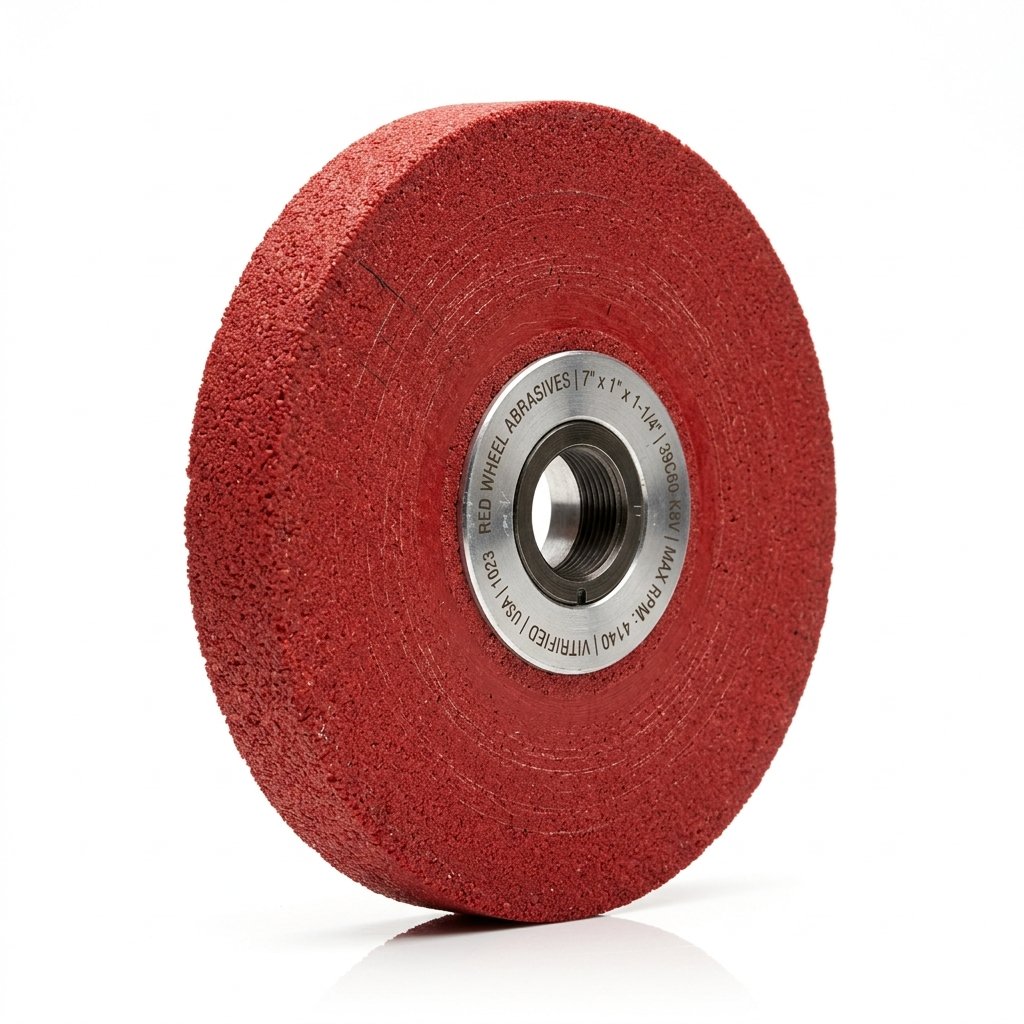
Bonded abrasives consist of abrasive grains held together by a binding agent or matrix, such as vitrified clay, resin, rubber, or shellac. The mixture is molded into specific shapes, most commonly grinding wheels, cutoff wheels, mounted points, and stones, and then baked or cured to achieve high structural strength.
These products are designed to rotate at high speeds, utilizing the outer edge or face of the wheel to remove material. The bonding matrix is engineered to gradually release worn, dull abrasive grains, exposing fresh, sharp grains underneath. This self-sharpening mechanism is critical for maintaining high material removal rates.
Safety is paramount with bonded abrasives. The structural integrity is reinforced with fiberglass mesh, especially in cutoff wheels, to withstand high centrifugal forces and prevent wheel breakage during operation. They are widely used in steel fabrication, foundry work, and precision machine shops.
Typical applications include heavy snagging wheels for foundry grinding, precision cylindrical grinding wheels, toolroom grinding wheels, and thin cutting-off wheels for metal and masonry fabrication.